If you are experiencing a serious emergency, please call 911, or 988 for mental health emergencies.
Our team is available Monday-Friday, 10:00am-6:00pm.
Please call 727-285-4553 or use the form below to contact us.
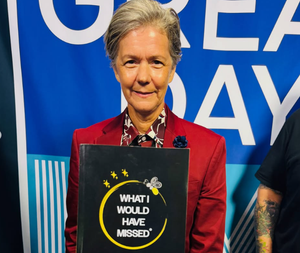
Guest Blog by Julie A. Rocco, Founder of What I Would Have Missed
In this guest blog, Julie Rocco reflects on lived experience, human-centered care, and the importance of listening to people’s stories in their own words. Drawing from both personal and professional experience, she explores how credibility, mental health, and healing intersect in the care we provide and receive.
Someone recently scrutinized my work, What I Would Have Missed, as potentially promoting “trauma drama.” The phrase stayed with me, not because I felt a need to defend my work, but because it made me think about what happens when people tell us difficult truths about their lives. At what point do we decide that the experiences we share are too emotional, sharing too much, or making others too uncomfortable? More importantly, what happens when those judgments affect whether we believe them?
There are legitimate concerns about how trauma is shared. Pain can be sensationalized and vulnerability can be exploited. People can also feel pressured to disclose experiences they are not ready to share. We should care about consent, privacy, context, and potential harm. We should also care about the harm that occurs when our discomfort with someone’s story causes us to diminish or discount the person telling it.
There is a term for this, epistemic injustice. Philosopher Miranda Fricker introduced the concept to describe what happens when people are wronged in their capacity as knowers. One form, called testimonial injustice, occurs when we give someone less credibility because of assumptions about who they are. In other words, we hear what they are telling us, but something about how we perceive them causes us to trust their knowledge less.
Think about what that can mean in mental health care. A diagnosis, history of hospitalization, suicidal thoughts, trauma, substance use, or emotional distress can influence how someone’s words are received. The very experience that brings a person into care can become part of the reason we question what they tell us once they get there.
I know mental health care from the inside as a suicide ideation, attempt, and loss survivor, and I have spent years listening to people talk about suicide, attempts, loss, grief, survival, recovery, and the complicated business of being human. As the founder of What I Would Have Missed, I made a decision early on that people would tell their stories in their own words. I did not want to coach someone’s experience into language that sounded more clinical, more hopeful, or simply easier for the rest of us to hear.
That is why the phrase “trauma drama” regarding my efforts to elevate and amplify voices of individuals with lived experience concerns me. It can move our attention away from what someone is trying to tell us about their mental health journey and toward whether they are telling it in a way we find acceptable. Someone describing an extraordinarily difficult experience may suddenly have another burden to carry. They have to tell us what happened while also being calm enough, clear enough, and appropriate enough for us to continue believing them. Their emotion can become a reason to question their credibility instead of helping us understand the depth of what they experienced.
This is where epistemic injustice becomes very real in human centered care. I do believe professional expertise matters. Clinical training, evidence, assessment, and treatment all matter. I also believe lived experience is knowledge and carries its own unique authoritative expertise. A clinician may understand depression through years of education and practice, while the person
sitting across from that clinician knows what their depression feels like at 2:17 in the morning when no one else is there. Both know something important, and neither form of knowledge needs to erase the other or create a hierarchy of power.
This matters in wraparound care because we can surround someone with excellent clinicians, case managers, peer specialists, family members, social workers, and community supports and still fail to center the person. Coordination alone does not make care human centered if everyone around the table is given more authority to explain someone’s life than the person living it.
One phrase has become foundational to my work, “We do not pathologize the human experience.” People grieve, rage, despair, become overwhelmed, contradict themselves, and struggle to find words for experiences that are incredibly difficult to explain. That does not make them unreliable witnesses to their own lives and it does not relinquish their lived expertise.
Human centered care asks us to pay attention not only to what people tell us, but also to what happens inside us when they tell us something difficult. Do we become uncomfortable? Do we start translating their words into language that feels safer or more familiar? Do we begin questioning their credibility because of how they are expressing their pain?
When someone tells us, “This is what it is like to be me,” they are giving us knowledge about a life we have not lived. We may bring education, experience, clinical expertise, resources, and evidence to the relationship, but they bring something we can never bring for them.
They know exactly what it is like to be them. Holding space for them to share their story authentically and without edit is crucial to their healing. Sharing one’s truth is not trauma drama. It is knowledge, and in human centered care, it is knowledge we must learn to listen to.
Julie Ann Rocco is a suicide loss survivor and a suicide attempt survivor. Julie is also the Founder, President and CEO of What I Would Have Missed where she seeks to create an international movement to prevent suicide and promote mental wellness by cultivating connections, camaraderie, and community. She does this by creating unique conduits for suicide attempt and ideation survivors to share their stories and spark open dialogue about suicide and mental wellness as well as inviting mental health professionals, family members, friends, and the community at-large to engage in open dialogue to deepen understanding of their unique journeys.